
For decades, continuing education followed a familiar formula: a conference room, a slide deck, and a speaker at the front.
That model remains an important part of medical education. A thoughtful lecture or live conference can give clinicians time to explore a subject in depth and learn alongside their peers.
But the lecture hall is no longer the only classroom.
Healthcare professionals also learn during a commute, while walking the dog, or in the few quiet minutes between responsibilities. A podcast can introduce a different approach to patient care. A documentary can reveal an experience that rarely comes up in training. A book can prompt someone to reconsider how they lead their team.
Continuing education should make room for those experiences.
At Learn at Pinnacle, we believe education should fit how clinicians actually live and practice. That means supporting different ways to learn while keeping the focus on what healthcare professionals take back to their work.
Learning That Fits Into Clinical Life
Healthcare professionals may not always have an uninterrupted hour available for a lecture. They may have time for a focused discussion during their commute or a short learning activity at the end of a shift.
On-demand education gives them more choice over when and how they engage. It also allows clinicians to return to a topic when a question arises in practice, rather than waiting for the next scheduled event.
This flexibility matters across career stages. The challenge is familiar to anyone balancing patient care with responsibilities outside work: finding education that deserves their attention and fits the time they have.
Podcasts Are Already Part of Medical Education
Medical podcasts give clinicians access to expert discussions beyond the conference room.
In a 2017 survey of emergency medicine residents, more than 88% of respondents reported listening to medical education podcasts at least monthly.
The appetite for podcast-based CME also appears in credit participation. A 2020 article on medical education podcasts reported that listeners had claimed 4,730 CME credits for Annals On Call over a six-month period.
These findings show that clinicians are choosing podcasts as part of their education. The format lets them hear experts work through a question, consider different perspectives, and explore subjects they can follow up on in practice.
For educators, that creates an opportunity to build on learning habits their audience already has. Our guide to offering CE and CME credit through a podcast explores what hosts should consider when planning that next step.
Focused Learning Still Needs Thoughtful Design
Shorter learning experiences can give clinicians space to engage with a specific question without committing to a full-length course.
A focused activity still needs a clear purpose and a connection to practice. Reflection gives learners time to consider what they have learned and how they might use it.
The same principle applies to longer formats. A conference session can provide room for discussion and hands-on learning. A book can support sustained engagement with a complex subject. The format should serve the learning.
At Pinnacle, we put reflection at the center of that process. We want clinicians to leave an activity with a clearer sense of what it means for their own work.
For educators developing a structured program, our guide to getting a healthcare course CE/CME accredited covers how educational objectives and evaluation fit into that process.
Stories Can Open Up Different Conversations
Some valuable learning experiences begin with someone telling their story.
A clinician reading a physician’s memoir or watching a documentary about healthcare may encounter a perspective that challenges their assumptions. Patient stories can reveal gaps between how care is delivered and how people experience it. Conversations about life in medicine can help healthcare professionals examine their own working environments.
These formats create space to explore the human side of practice, including experiences that can be difficult to capture in a traditional presentation.
The educational value comes from engaging with those ideas and considering their relevance to care. A structured learning activity can help clinicians make that connection.
Connecting Valuable Learning With CE and CME Credit
Healthcare professionals already seek out education through books, films, and podcasts. Creators are producing work that gives those audiences reasons to think more deeply about medicine.
Yet there is not always a clear path from engaging with that content to earning continuing education credit.
A clinician might read a book that changes how they approach a difficult conversation with a colleague. A documentary might prompt them to reconsider how they prepare patients for treatment. Without an appropriate educational activity around that experience, the learning may never appear on their CE transcript.
Creators face a related challenge. They know their work reaches healthcare professionals, but they may not know how to develop it into an activity eligible for credit.
That is where Pinnacle’s CE and CME accreditation services can help.
Built by Physicians, Around How Clinicians Learn
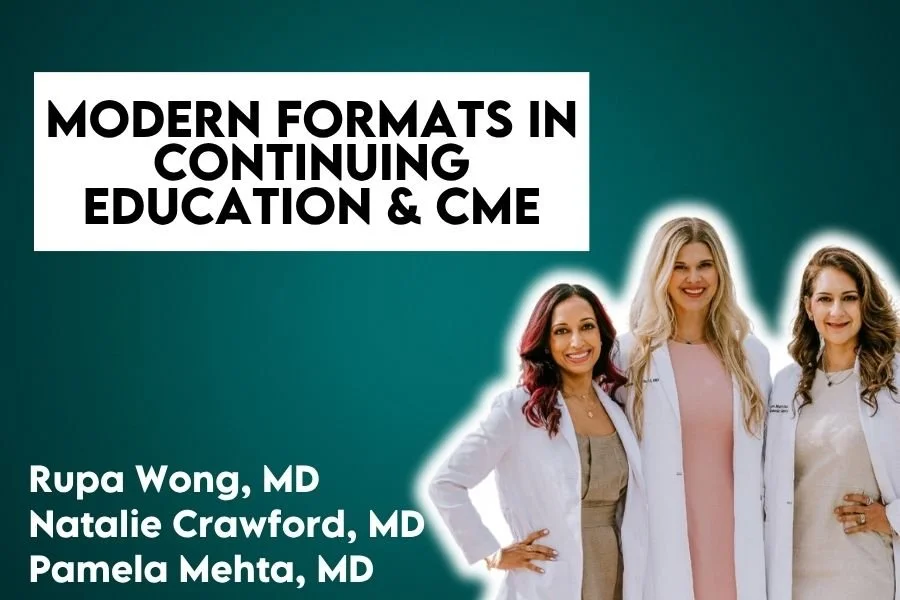
Run by three physicians, Pinnacle brings experience of clinical practice to continuing education. We believe CE should support professional growth and give clinicians something useful to carry into their work.
We partner with educators to develop eligible CE and CME activities across formats, from conferences and online courses to books and films. Through joint providership, Pinnacle serves as the accredited provider while partners retain ownership of their content and audience.
Our team guides partners through educational planning and content review, and manages the credit process through to learner certificates. This gives creators practical support without asking them to become accreditation specialists.
As a jointly accredited provider, Pinnacle supports continuing education for multiple healthcare professions. The credit available depends on the activity and its intended audience. Our guide to healthcare CE credits explains the different credit types.
We also offer a reflective learning pathway. In these activities, learners earn credit for a structured reflection on what they learned and how they intend to apply it. Pinnacle accredits the reflection, rather than the underlying source content.
That distinction allows us to support different learning experiences while keeping a clear connection between the education and its purpose.
What This Looks Like in Practice
Learning From Patient Experiences Through Film
BrachyStories is a documentary about the experiences of people undergoing cervical cancer brachytherapy. Available through Pinnacle as an enduring educational activity, it brings patients’ perspectives into professional learning.
The film gives healthcare professionals an opportunity to consider how patients experience treatment and what that means for communication and support. Reflection helps learners connect those experiences to their own practice.
Explore BrachyStories and other examples of CE and CME learning through films.
Exploring Professional Growth Through Books
A book can give clinicians time to engage with ideas beyond a single session.
In Cutting a Path, neurosurgeon Dr. Sheri Dewan shares the personal and professional obstacles she encountered while pursuing her career.
An educational activity built around a book gives readers a way to connect its themes to their own working lives. The reflection becomes an opportunity to examine assumptions and identify something they want to approach differently.
Taking Podcast Conversations Into Practice
Shows such as As a Woman, In Focus, and The Resilience Factor are part of the Pinnacle Podcast Network. They bring healthcare conversations into a format listeners can access on their own schedules.
Through the Learn at Pinnacle app, listeners can complete a structured reflection to earn credit for eligible learning. The process asks them to move beyond listening and consider how an insight could inform their practice.
Continuing Education With Room for More Ways to Learn
Conferences will continue to bring clinicians together. Courses will continue to offer depth and structure. Alongside them, other formats give healthcare professionals more opportunities to engage with education that matters to them.
Pinnacle helps educators build those opportunities into learning activities with a clear purpose and a practical route to credit.
For clinicians, that means more choice in how they pursue professional growth. For creators, it means support from a team that understands both the educational work and the accreditation process.
Have a course, podcast, book, film, or event you would like to offer for CE or CME credit? Tell us what you’re creating, and we’ll help you explore the right approach.