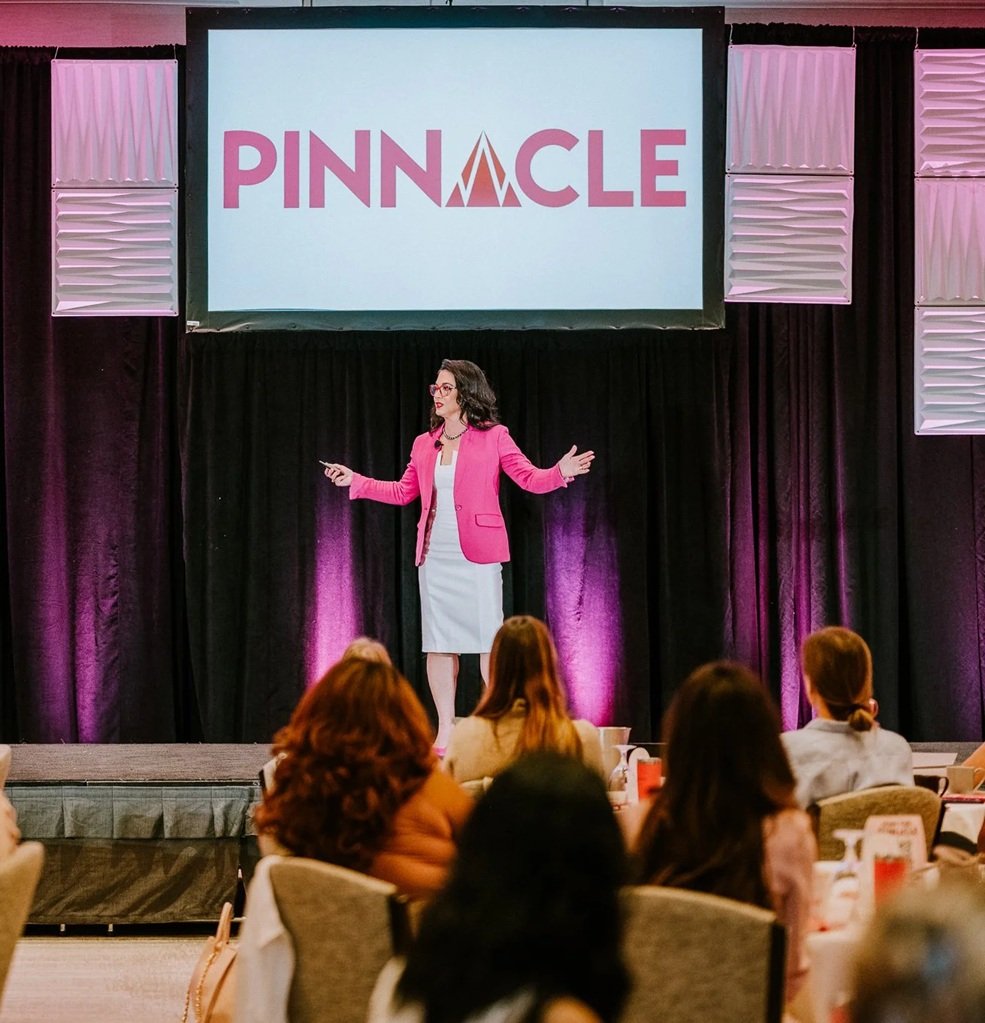
Unlock the Full Power of Your Conference Experience: A Guide for Women in Medicine

Conferences are more than just gatherings — they are career accelerators. For women in medicine, they offer a unique blend of professional growth, community building, and strategic career nourishment.
But, many attendees walk away with only a fraction of the value available. The difference between an “okay” conference experience and an exceptionally transformative experience lies in how intentionally you engage, with the content, the people, and the opportunities for continuing education credit.
In this article, we’ll walk through how to strategically prepare for, actively engage in, and continue the momentum after a conference, especially one like the Pinnacle Conference.
Why Conferences Matter for Women in Medicine
The demands on women in clinical practice, whether in medicine, nursing, allied health professions, or advanced practice, are intensifying. Balancing clinical excellence with leadership aspirations, work-life integration, and ongoing professional growth isn’t easy. Conferences serve as intentional pauses that nourish your intellect, expand your network, and refresh your purpose.
Top Reasons to Attend with Purpose
Accelerated Learning: Conferences curate cutting-edge content that can take months to gather independently. Evidence-based updates, practical workshops, and expert panels consolidate essential insights into a time-efficient format.
Community and Belonging
Female clinicians often operate in environments where they may feel underrepresented. Conferences, especially those designed for women’s professional growth, offer vital connection, mentorship, and solidarity.
“I created a 7 figure business online by focusing on the key ingredient that keeps people coming back... fostering connection and community, not just sharing knowledge”
Professional Visibility and Leadership Development
Presenting, networking with thought leaders, and participating in panels or roundtables enhance your professional profile.
“The support from many women in medicine from all across the United States is unmatched and like nothing I’ve experienced elsewhere.”
Continuing Education and Career Advancement
With evolving requirements across boards and licensing bodies, conferences with accredited education help you earn credits while learning. This means you are maximizing the time you spend.
Strategically Preparing for a Conference
Preparation is the first opportunity many attendees skip—but not you. A thoughtful game plan ensures you arrive focused, energized, and ready to maximize every hour.
1. Clarify Your Goals
Start with intentional reflection:
What specific skills or knowledge gaps do you want to fill?
Are you seeking clinical updates, leadership strategies, or practice-management insights?
Do you want to expand your network in a particular niche or specialty?
Write down 3 concrete goals. These will become your guideposts.
2. Review the Agenda in Advance
Instead of simply scanning the titles, ask:
Which sessions align with my goals?
Which offer provable outcomes (case studies, toolkits, templates)?
Who are the speakers I want to meet?
Pro tip: Mark sessions with multiple ticks—for education, networking, and career impact.
3. Map Your Accreditation Opportunities
Conferences like Pinnacle partner with accrediting bodies to offer continuing education (CE/ CME / CNE / AAPA credits) that count toward licensure and board requirements. Understanding the types and number of credits available lets you optimize your attendance for both learning and compliance.
Depending on your profession, you might be eligible for:
AMA PRA Category 1 Credit™ (Physicians)
AAPA Category 1 Credit (Physician Assistants)
ANCC Credits (Nursing and APPs)
Other boards and specialty accreditations
Before the conference, check:
Which sessions are “credit eligible”
How credits are claimed (e.g., attendance verification, evaluations)
How many credits you need for your annual requirements
Having this mapped saves time and ensures every session you attend counts both professionally and academically.
4. Prepare Your Tools
Mobile apps: Most conferences have apps with schedulers, maps, and messaging features.
Digital business cards: Quick exchange with contacts.
Notebook or note-taking system: Consider topics you’ll consistently track (e.g., “3 Actions I’ll Implement,” “People to Follow Up With,” “Tools to Explore”).
Engaging Intentionally During the Conference
Once you arrive, your purposeful presence determines the magnitude of your return on investment, intellectually, socially, and professionally.
1. Attend With Intent
In breakout sessions:
Sit forward, take focused notes, and consider how this applies to your setting.
Ask questions, especially those that bridge evidence with practice.
In workshops:
Actively participate—don’t be a passive observer.
Seek practice tools and frameworks that you can apply on Monday morning.
Accredited sessions often include evaluation forms—use these thoughtfully. They not only help you claim your credit but also solidify your learning.
2. Build Strategic Connections
Networking is not about collecting business cards—it’s about meaningful exchanges.
Identify three people you want to meet: a speaker, a peer in your specialty, and someone in a role you aspire to.
Have a conversation agenda—not scripted, but purpose-driven: ask about their challenges, solutions, and recommendations.
Exchange contact information with a next-step in mind (e.g., coffee chat, LinkedIn message with a resource reference).
“There's so many different media outlets now, which is why it's important to say, what are my goals, and then what serves them, and then start reaching out, because they are hungry for your input as experts.”
3. Leverage Accreditation Conversations
Many attendees overlook the fact that accreditation partners facilitate interprofessional learning opportunities. That means you can:
Engage with colleagues from different disciplines
Explore credits that apply to multiple boards
Discuss how your profession interprets various clinical updates
Ask accreditation representatives questions like:
How does this session translate into my profession’s credit requirements?
Are there bundled accreditation tracks?
Can I claim partial credits for specific sessions?
These chats help you navigate the often confusing process of claiming and reporting credits across boards and professions.
4. Attend Social & Community Events
Whether it’s a breakfast roundtable or an evening reception, these moments often provide your deepest learning and relationships.
Share challenges and solution
Learn from others’ experiences
Find potential collaborators or mentors
Sustaining the Momentum After the Conference
The real impact of a conference is in what you do next. Without a solid follow-up plan, even the richest experiences fade.
1. Organize Your Learnings
Within 48 hours of the conference:
Review your notes and evaluate:
3 Big Ideas I Will Implement
2 People to Follow Up With
1 System or Practice Change I Will Advocate For
Transfer any credentials or credit certificates to your professional portfolio or licensure tracker.
“Think big, start small, but act now.”
2. Follow Up With Contacts
Send personalized messages within a week:
Thank them for their insight
Reference a specific point from your conversation
Propose a next step: coffee, a virtual call, resource share
These small touches elevate a connection into a lasting professional relationship.
3. Implement and Share What You Learned
Present a summary to your team or department. Teaching others reinforces your learning and amplifies your influence.
If you implemented a change—clinical, operational, or cultural—track the outcome. Celebrate small wins and share them with your network.
Accreditation Isn’t an Afterthought—It’s an Asset
For many clinicians, the concept of accreditation is transactional: “I need X hours.” But conferences that incorporate robust accreditation partnerships—like those at Pinnacle—offer something deeper: structured learning that aligns with professional standards and career development goals.
Here’s how to think about accreditation as a strategic advantage:
1. Accreditation Adds Credibility and Structure
Accreditation partners ensure that sessions:
Meet pedagogical standards
Are evidence-based and ethically sound
Are evaluated for you to claim credit
This curated quality differentiates accredited education from ad-hoc learning.
2. Accredited Sessions Support Multiple Boards
A well-accredited conference offers credits that satisfy requirements for:
Physicians (AMA PRA Category 1 Credits™)
APPs (AAPA, ANCC)
Other allied professionals
This makes learning efficient, not fragmented.
3. Accreditation Tracks Can Guide Your Learning Path
Instead of choosing sessions at random, look for accreditation tracks:
Clinical mastery
Leadership and practice management
Wellness and professional sustainability
Aligned tracks help integrate your learning into a coherent professional development journey.
Closing Thoughts
Conferences hold immense potential—but that potential only becomes realized value when approached with clarity, intentional engagement, and thoughtful follow-through. As a female physician or APP, you bring a unique perspective and set of professional goals to every learning opportunity. Lean into that.
Plan with purpose, engage with intention, and leverage accreditation partners not just for credits, but for quality, applicable, career-shaping learning. When you do, a conference becomes more than just a few days away—it becomes a catalyst for lasting transformation in your practice, your career, and your leadership impact.
Experience Pinnacle Conference
Join us for a packed weekend full of growth, community, and ideas that will help you move your career forward. Connect with people who see you, challenge you, and remind you why you started.